

What is the role of coupling agents in polymers for special adhesive?
Nov 12, 2025
Hey there! As a supplier of polymers for special adhesives, I've been in the thick of the industry for quite some time. And one topic that always comes up in discussions is the role of coupling agents in these polymers. So, let's dive right in and explore what these coupling agents are all about and how they make a big difference in special adhesives.
First off, what the heck are coupling agents? Well, coupling agents are like the matchmakers in the world of polymers and adhesives. They're substances that can bond two different types of materials together. In the context of polymers for special adhesives, they help improve the adhesion between the polymer matrix and the substrate. You know, like making sure your glue sticks really well to whatever you're trying to stick together.
One of the main reasons we use coupling agents is to enhance the wetting of the polymer on the substrate. When a polymer can wet the substrate better, it means it can spread out more evenly and form a stronger bond. Think of it like trying to paint a wall. If the paint doesn't wet the wall properly, it'll be patchy and won't stick well. But if you use a primer (kind of like a coupling agent in this analogy), the paint goes on smoothly and adheres nicely.
Coupling agents also play a crucial role in improving the mechanical properties of the adhesive. They can increase the strength, toughness, and durability of the bond. This is super important, especially in applications where the adhesive is going to be under a lot of stress. For example, in automotive or aerospace applications, the adhesives need to be able to withstand high temperatures, vibrations, and mechanical forces. Coupling agents help make sure the polymer adhesive can handle all that.
Another cool thing about coupling agents is that they can improve the chemical resistance of the adhesive. They can protect the polymer from being attacked by chemicals, solvents, or other environmental factors. This is really useful in industries like chemical processing or marine applications, where the adhesives are exposed to harsh chemicals and corrosive environments.
Now, let's talk about some specific types of coupling agents and how they work. One common type is silane coupling agents. These guys have a unique structure that allows them to react with both the polymer and the substrate. On one end, they have a functional group that can react with the polymer, and on the other end, they have a group that can bond with the substrate. This creates a strong chemical bond between the two, improving the adhesion.
Another type is titanate coupling agents. These are great for improving the dispersion of fillers in the polymer. Fillers are often added to polymers to enhance their properties, like increasing their strength or stiffness. But if the fillers don't disperse well, they can form clumps and weaken the adhesive. Titanate coupling agents help break up these clumps and make sure the fillers are evenly distributed throughout the polymer, resulting in a stronger and more consistent adhesive.
So, how do we use coupling agents in our polymers for special adhesives? Well, it's usually a matter of adding them to the polymer formulation during the manufacturing process. The amount of coupling agent we use depends on a few factors, like the type of polymer, the substrate, and the specific application. We have to do a lot of testing and experimentation to find the right balance.
At our company, we've been using coupling agents in our products for years, and the results have been amazing. Our adhesives have better adhesion, stronger mechanical properties, and improved chemical resistance. And that's why our customers keep coming back for more.
If you're in the market for polymers for special adhesives, you might be interested in some of our products. We have a great selection, including Hardener Free Pu Adhesive No Need Hardener, Convestro U-54 Alternative Pud, and Waterborne Polyurethane Pressure Sensitive Adhesive PU PSA. These products are all formulated with the latest technology and include the right amount of coupling agents to give you the best performance.

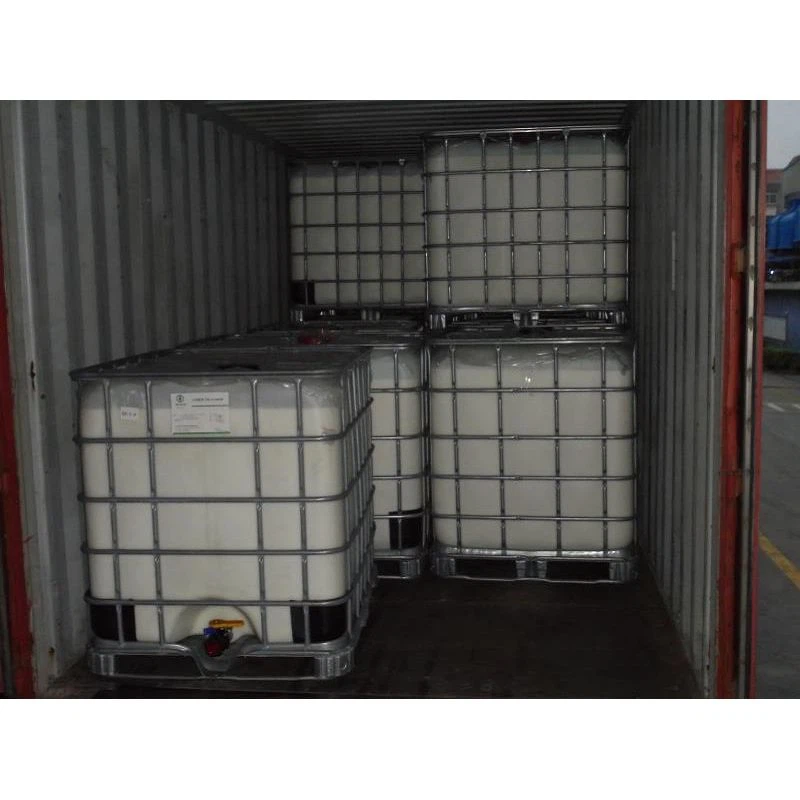
If you're interested in learning more about our products or have any questions about coupling agents in polymers for special adhesives, don't hesitate to reach out. We're always happy to have a chat and help you find the right solution for your needs. Whether you're working on a small DIY project or a large industrial application, we've got you covered.
In conclusion, coupling agents are an essential part of polymers for special adhesives. They improve adhesion, mechanical properties, and chemical resistance, making the adhesives stronger, more durable, and more reliable. If you're looking for high-quality polymers for special adhesives, give us a try. We're confident you won't be disappointed.
References
- "Handbook of Adhesives and Sealants" by Andrew Pizzi and K. L. Mittal
- "Polymer Science and Technology" by Donald R. Paul and Charles B. Bucknall
- "Adhesion Science and Engineering: Surfaces, Chemistry, and Applications" by K. L. Mittal